









We use cookies to allow our website to function properly, personalize content and advertisements, provide social media features, and analyze traffic. We also share information about your use of our website with our social media, advertising, and analytics partners.
Annual Performance
During the year, the Company demonstrated steady growth across financial, governance, and sustainability dimensions. Net profit after tax reached NT$2.165 billion, representing an increase of 45.2% compared with 2023, reflecting improved operational efficiency and the gradual realization of market expansion results, and laying a solid foundation for continued investment in innovation and sustainability.
At the same time, the Company maintained its commitment to integrity governance, recording zero corruption incidents for the year, demonstrating sound internal control mechanisms and effective risk management, and successfully fostering a transparent and responsible corporate culture. In terms of ethical management, 15,902 participations were engaged in integrity management training, strengthening employees’ awareness of legal compliance, ethics, and professional conduct, and embedding integrity as a core value of daily operations. In response to increasingly severe information security threats, the Company also successfully passed ISO 27001 Information Security Management System certification, indicating that its information protection processes meet international standards and effectively safeguard the data security of customers and partners.
Overall, these achievements demonstrate the Company’s comprehensive progress in financial performance, integrity governance, gender diversity, and information security, laying a more solid foundation for sustainable development.
2.165 billion
Net profit after tax
0
Corruption incident
15902 attendances
Business integrity education and training
Three Lines of Defense
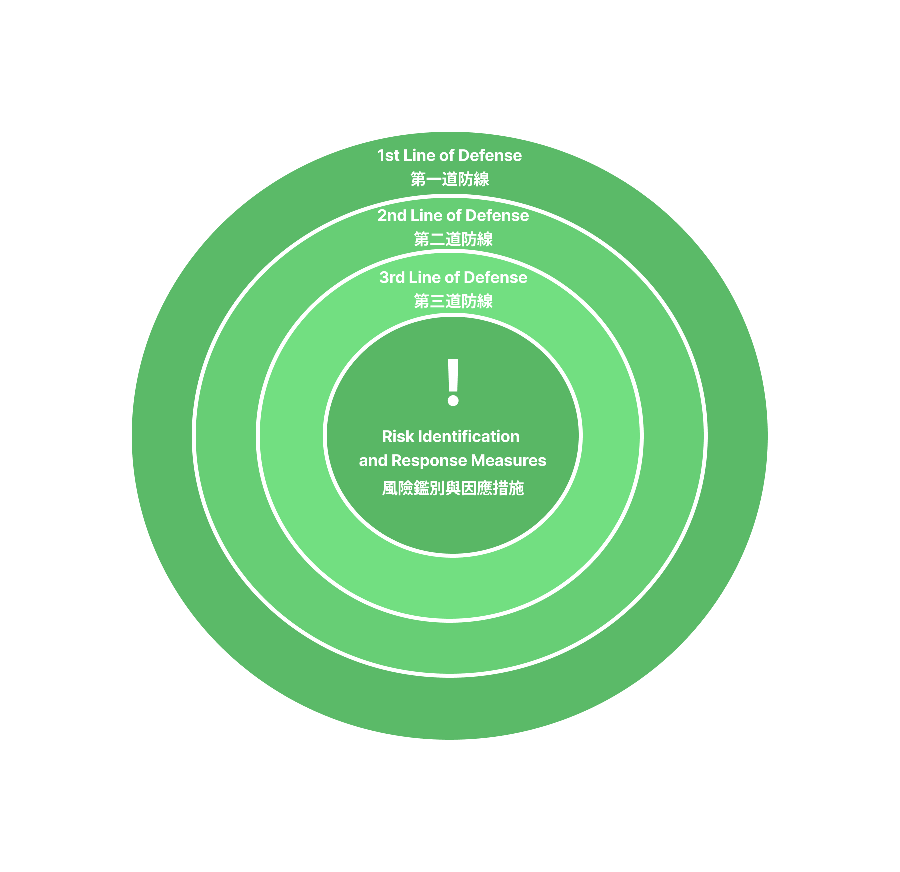
According to the Global Risks Report 2025 published by the World Economic Forum (WEF), more than half (52%) of global experts expect instability over the next two years. Over the longer term, environmental risks continue to dominate global concerns, with "extreme weather events," "biodiversity loss and ecosystem collapse," and "critical change to Earth systems" ranking among the top three risks over a ten-year horizon, highlighting the urgency of climate action and sustainability transition.
In response to an increasingly complex and interconnected global risk environment, Sunon upholds the principle that "prevention is better than response." In 2023, the Company joined the SBTi Science Based Targets initiative and, under a 1.5 ° C warming scenario, established a target of achieving a combined annual reduction of 6.25% in Scope 1 and Scope 2, and committed to halving carbon emissions by 2030 and achieving net zero emissions by 2050.
Going forward, we will continue to strengthen the full cycle of risk identification, assessment, response, and monitoring, and incorporate emerging risks such as climate change, supply chain stability, information security, and geopolitics into our management scope, in order to ensure sound operations and create long-term value for shareholders, employees, customers, and society.
To safeguard the best interests of the Company, employees, shareholders, and all stakeholders, Sunon has established risk management procedures to carry out risk assessment and identification. By evaluating factors such as likelihood of occurrence, impact, and control effectiveness, the Company identifies various types of risks and formulates response measures and handling procedures to reduce potential risks to an acceptable level. The Company did not experience any material risk events in 2025.
Sunon seeks to avoid potential crises and losses through the following risk control measures.
First Line of Defense: Business and Operating Units
- Identify, assess, and manage day-to-day operational risks
- Implement internal control procedures
- Ensure business activities comply with policies and regulations
- Conduct risk self-assessments (RCSA)
Second Line of Defense: Risk Management and Compliance Units
- Establish risk management policies, frameworks, and methodologies
- Monitor overall risk status and trends
- Provide professional guidance on risk management
- Ensure regulatory compliance
- Regularly report risk status to management
Third Line of Defense: Internal Audit Unit
- Evaluate the effectiveness of risk management and internal control systems
- Verify the operation of the first and second lines of defense
- Provide recommendations for improvement
- Report directly to the Board of Directors / Audit Committee
Risk Assessment and Management
Risk Assessment and Management
To promote sustainable corporate operations and establish a sound risk management mechanism, the Company has formulated its “Risk Management Policy and Procedures.” Taking into account the nature of its business and operations, the Company identifies potential risk factors and seeks to keep the risks it faces within its established risk appetite and risk tolerance, thereby ensuring the achievement of its corporate objectives.
On August 7, 2026, the Company reported to the Board of Directors on the implementation of risk management activities for 2025.
Risk Management Organization
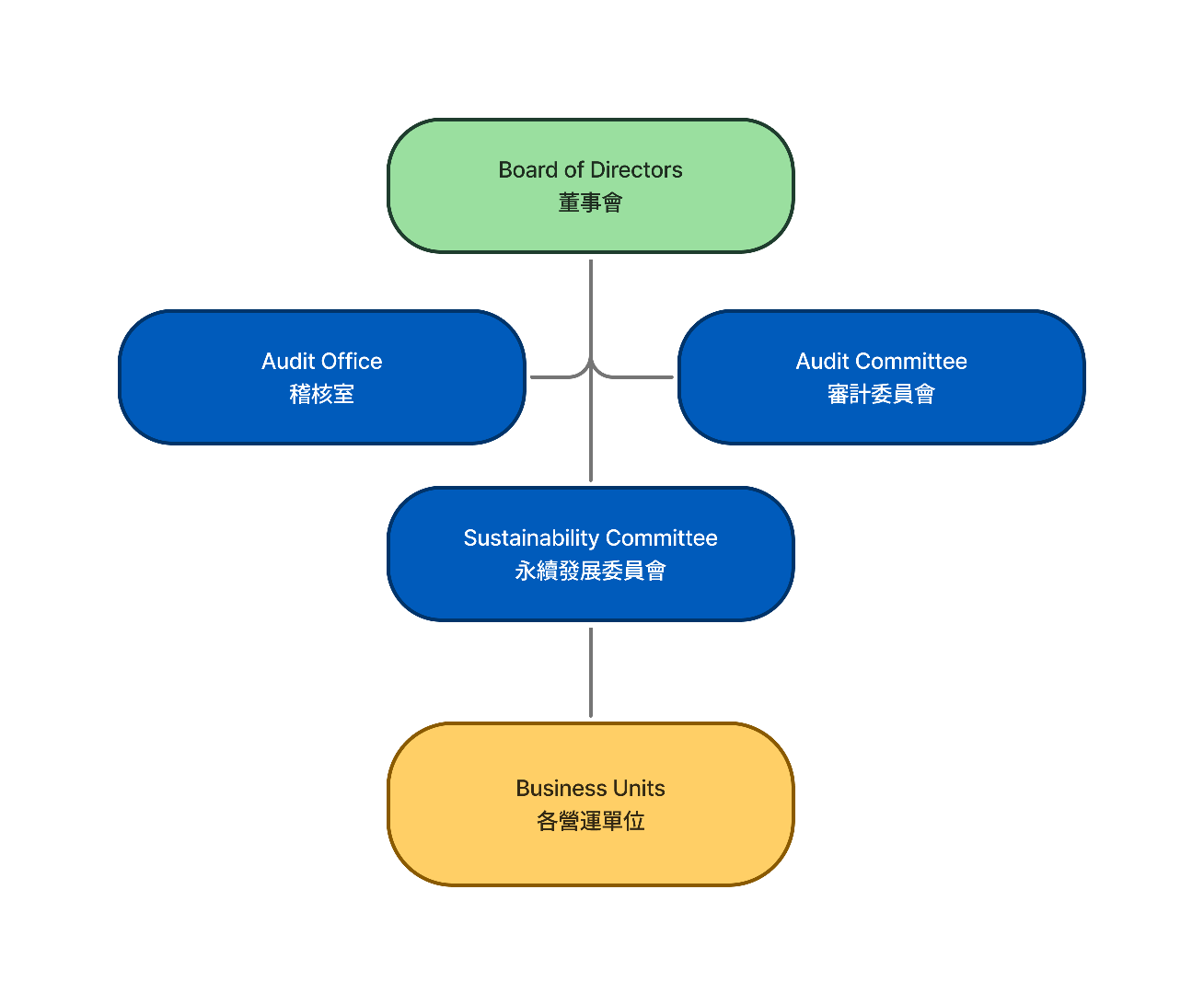
Risk Management Organization Organizational Structure, Responsibilities, and Authority
- The Board of Directors is the Company’s highest governing body responsible for risk management. It approves risk management policies and related regulations, oversees the overall implementation of risk management, and ensures that risks are effectively controlled.
- The Audit Committee assists the Board of Directors in overseeing the Company’s risk management mechanisms. It reviews risk management policies, procedures, and frameworks; approves the Company’s risk appetite, risk control priorities, and risk levels; and periodically reviews their applicability and effectiveness. The Audit Committee ensures the effective implementation of the risk management mechanism and oversees the management of existing and potential risks faced by the Company.
- The Sustainable Development Committee serves as the unit responsible for promoting risk management. It is responsible for the formulation, amendment, and repeal of risk management policies and procedures. Based on the characteristics of individual risks, it establishes quantitative or qualitative measurement criteria as the basis for risk analysis. Management of each operating unit regularly conducts relevant risk assessments, formulates response measures, and performs reviews. Heads of each unit are responsible for risk management and are required to analyze, monitor, and report risks relating to their respective units and to ensure the implementation of risk control mechanisms and procedures.
- Personnel in each operating unit are responsible for first-line risk management in their daily operations. They are required to analyze, monitor, and prevent risks within the scope of their respective departments’ responsibilities, ensure that risk control mechanisms and procedures are effectively implemented, and regularly report on the implementation of various risk management activities.
- Internal Audit is an independent department reporting to the Board of Directors. In accordance with this Policy and Procedures and the Company’s various risk management systems, Internal Audit prepares an annual audit plan, independently evaluates the effectiveness of risk management activities, and provides recommendations for improvement. Audit results are regularly reported to the Audit Committee and the Board of Directors to help ensure that key business risks are properly managed and that the internal control system operates effectively.
Risk Identification and Response Measures
SUNON’s risk management process comprises risk identification, risk analysis, risk evaluation, risk response, and risk monitoring and review. By assessing the likelihood and impact of risk events, as well as the effectiveness of existing control measures, the Company identifies various types of risks and develops corresponding response strategies and handling procedures. These measures are designed to reduce potential risks to an acceptable level, thereby effectively preventing potential crises and minimizing possible losses.
| Risk Type | Risk Description | Response Measures | Responsible Unit |
|---|---|---|---|
|
Strategic and Market Risk ⚖️ |
Global economic changes and intensified industry competition Changes in customer demand and market uncertainty |
|
GS Business Unit |
|
Financial Risk 💵 |
Exchange rate, interest rate, and inflation fluctuations |
|
Finance Division |
|
Supply Chain and Material Sourcing Risk 🏙️ |
Unstable supply of key raw materials or market shortages Geopolitical and supply chain disruption risks |
|
Strategic Procurement Division |
|
Transportation and Logistics Risk 🚚 |
Product damage or delays during transportation |
|
Strategic Procurement Division Global Production Units |
|
Operational and Equipment Risk 🏢 |
Equipment failures affecting production efficiency Abnormal energy use or unstable supply |
|
Administration Department Management Department Global Production Units |
|
Occupational Safety and Health Risk 👷 |
Occupational injury risk during operations Safety management risk in contractor operations |
|
Occupational Safety Team Management Department |
|
Environmental and Climate Change Risk 🌏 |
Stricter environmental regulations and operational impacts from climate change Air pollution and waste management risk |
|
Occupational Safety Team Management Department |
|
Regulatory Compliance and Integrity Risk 🕺 |
Non-compliance with laws and regulations or occurrence of misconduct |
|
Internal Audit Office Global Production Units |
|
Information Security Risk 📱 |
Data leakage, cyberattacks, or system interruptions |
|
Information Security Team |
|
Human Resources Risk 🏃 |
Challenges in talent recruitment and retention Labor disputes or poor internal communication leading to declining trust |
|
Global Production Units |
|
Business Continuity Risk 🗺️ |
Risk of operational disruption caused by extreme climate, infectious disease, or other major incidents |
|
Information Security Team Occupational Safety Team Global Production Units Operations Management Division Management Department |
Note: Key raw materials as defined by the Company mainly include plastic raw materials, electronic components, bearing-related parts, and enameled wire. This does not apply to low-demand or special materials; however, where there is a risk of insufficient supply from a single supply chain, the Company will immediately initiate the establishment of a second supplier